kolom
Konstitusionalitas Pilkada Langsung
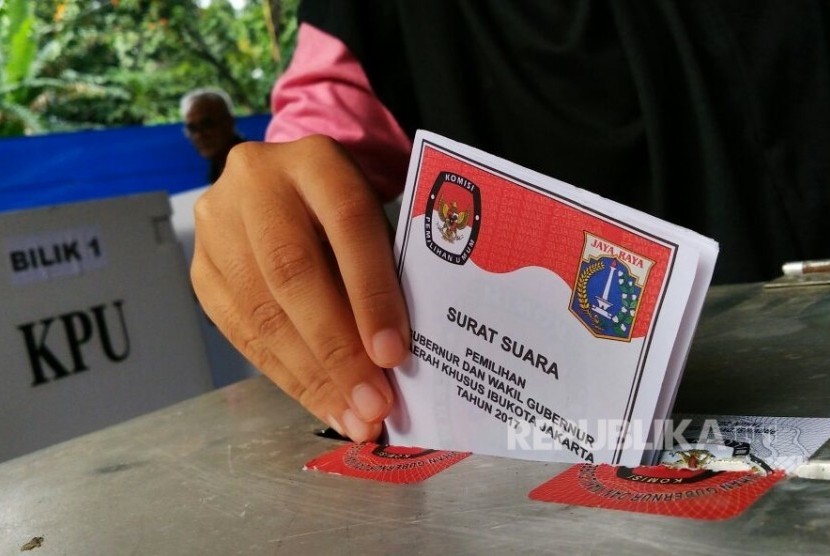
Pada peringatan hari lahir Partai Golongan Karya (Golkar) beberapa waktu lalu, Prabowo Subianto kembali mengemukakan pandangannya tentang sistem pemilihan kepala daerah (pilkada). Ia menilai pilkada langsung yang diterapkan sejak 2005 mengandung banyak masalah, antara lain mahal dan bahkan menjadi sumber korupsi. Presiden kedelapan Republik Indonesia itu juga menyatakan bahwa demokrasi Indonesia—yang di dalamnya pemilihan kepala daerah dilakukan secara langsung—sekadar ‘niru niru negara lain’.
Tulisan ini berargumen bahwa penghapusan pilkada langsung bukan hanya persoalan efisiensi anggaran atau tata kelola pemerintahan, melainkan menyentuh aspek yang jauh lebih mendasar: konstitusionalitas sistem pemilihan kepala daerah demokratis di Indonesia.
Problematis
Salah satu argumen yang kerap digunakan pendukung penghapusan pilkada langsung ialah bahwa sistem ini bertentangan dengan dasar negara, khususnya sila keempat Pancasila: Kerakyatan yang Dipimpin oleh Hikmat Kebijaksanaan dalam Permusyawaratan/Perwakilan. Frasa ‘permusyawaratan/perwakilan’ ditafsirkan sebagai dasar normatif bahwa kepala daerah seharusnya dipilih oleh Dewan Perwakilan Rakyat Daerah (DPRD). Karena ada kata perwakilan, maka pemilihan oleh wakil rakyat dianggap paling sesuai dengan Pancasila.
Penafsiran ini problematis. Sila keempat Pancasila memang menjadi landasan bagi sistem demokrasi perwakilan. Namun, demokrasi perwakilan tidak identik dengan mekanisme pemilihan pemimpin oleh wakil rakyat. Demokrasi perwakilan berbicara tentang cara pengambilan keputusan politik melalui lembaga perwakilan, bukan tentang cara teknis memilih presiden atau kepala daerah. Soal mekanisme pemilihan pemimpin sama sekali tidak dirinci dalam sila keempat tersebut.
Dalam literatur politik, dikenal dua bentuk besar sistem demokrasi: demokrasi langsung dan demokrasi perwakilan. Demokrasi langsung, sebagaimana dijelaskan Jean Jacques Rousseau, menempatkan kedaulatan sepenuhnya ada di tangan rakyat. Hukum dan kebijakan publik harus ditetapkan langsung oleh rakyat berdasarkan general will atau kehendak umum. Dalam kerangka ini, kedaulatan rakyat tidak boleh diwakilkan kepada parlemen; penyerahan kekuasaan kepada wakil justru dianggap sebagai pengkhianatan terhadap kedaulatan itu sendiri.
Namun, Rousseau juga menyadari bahwa demokrasi langsung hanya mungkin dijalankan dalam masyarakat yang kecil dan relatif homogen. Kehendak umum bukanlah penjumlahan kehendak individu, melainkan kehendak kolektif seluruh warga. Karena itu, demokrasi langsung hampir mustahil diterapkan dalam negara modern yang wilayahnya luas dan masyarakatnya majemuk.
Di Indonesia, misalnya, mungkin hanya pada level rukun tetangga (RT) yang bisa menerapkan sistem demokrasi langsung tersebut. Di level pemerintahan terkecil ini, segala keputusan menyangkut hidup bersama bisa langsung diambil oleh semua anggota RT. Di level ini, warga tidak harus diwakili oleh siapa pun. Namun, sistem tersebut menjadi rumit ketika jumlah peserta atau warga lebih besar dan wilayah teritori politik meluas.
Keterbatasan inilah yang melahirkan demokrasi perwakilan sebagai solusi praktis. Semua negara demokratis modern—baik yang menganut sistem presidensial seperti Amerika Serikat maupun sistem parlementer seperti Inggris—menerapkan demokrasi perwakilan. Dalam sistem ini, rakyat mendelegasikan kewenangan pengambilan keputusan kepada lembaga perwakilan, tetapi mekanisme pemilihan pemimpin dapat sangat beragam, tergantung desain konstitusi masing masing negara.
Sila keempat Pancasila berbicara pada tingkat prinsip: Indonesia menganut demokrasi perwakilan karena demokrasi langsung tidak mungkin diterapkan dalam masyarakat yang besar dan plural. Menarik kesimpulan bahwa sila tersebut secara otomatis mengharuskan pemilihan kepala daerah oleh DPRD adalah tafsir yang gegabah. Tidak ada satu pun frasa dalam sila keempat Pancasila yang menyatakan bahwa kepala daerah harus dipilih oleh lembaga perwakilan.
Dalam demokrasi perwakilan, pemilihan kepala daerah atau pemimpin negara dapat dilakukan melalui pemilihan langsung oleh rakyat maupun melalui parlemen. Mekanisme tersebut bukan ditentukan oleh Pancasila, melainkan oleh konstitusi. Di Indonesia, mekanisme itu telah diatur secara eksplisit dalam Undang Undang Dasar Negara Republik Indonesia Tahun 1945. Pasal 18 ayat (4) UUD NRI 1945 menyatakan bahwa ‘Gubernur, bupati, dan wali kota masing masing sebagai kepala pemerintah daerah provinsi, kabupaten, dan kota dipilih secara demokratis’. Makna dipilih secara demokratis ini dijelaskan lebih lanjut dalam Pasal 22E ayat (1) UUD NRI 1945 yang menegaskan bahwa ‘Pemilihan umum dilaksanakan secara langsung, umum, bebas, rahasia, jujur, dan adil setiap lima tahun sekali’.
Putusan Mahkamah Konstitusi
Mahkamah Konstitusi, sebagai lembaga tertinggi penafsir konstitusi, dalam berbagai putusannya secara konsisten menyatakan bahwa pemilihan kepala daerah merupakan bagian dari rezim pemilihan umum. Putusan MK Nomor 85/PUU XX/2022, 87/PUU XX/2022, 12/PUU XXI/2023, 135/PUU XXII/2024, 104/PUU XXIII/2025, dan 110/PUU XXIII/2025 secara eksplisit tidak membedakan antara rezim pemilu dan pilkada.
Dengan demikian, secara konstitusional, pilkada harus mengikuti kaidah dasar pemilihan umum: dilaksanakan secara langsung, umum, bebas, rahasia, jujur, dan adil. Upaya menghapus pilkada langsung bukan sekadar perubahan desain kelembagaan, melainkan berpotensi bertentangan dengan konstitusi sebagaimana telah ditafsirkan secara konsisten oleh Mahkamah Konstitusi.
* dimuat di kolom Opini Harian Media Indonesia pada 22 Januari 2026
https://mediaindonesia.com/opini/852428/konstitusionalitas-pilkada-langsung
Read more...

kolom
Direct Local Elections Must Stand, They Improve Public Health Services
By Saidiman Ahmad, Program Manager at Saiful Mujani Research and Consulting (SMRC).
The public desire to maintain the system of direct local executive elections remains incredibly strong. The majority of Indonesians want to exercise their sovereignty by choosing their own regents, mayors and governors. This attitude has remained consistent over the years, as confirmed by public opinion surveys conducted by credible polling institutions.
An SMRC survey in May 2023 found that 86 percent of citizens rejected the idea of electing local leaders through regional legislatures (DPRD). A survey by Indikator Politik Indonesia in August 2025 showed that 94.2 percent of citizens wanted regents and mayors to be elected directly by the people. Similarly, a Litbang Kompas survey in December 2025 found that 77.3 percent of citizens supported direct local elections.
Public support for direct local elections is almost unanimous. This implies that the push to change the election system does not reflect the aspirations of the people, but rather those of political elites who lack popular roots. Indonesians do not want their right to determine regional heads to be usurped.
Amid widespread public resistance, the House of Representatives and the government backed down on Monday from the plan to reinstate indirect local elections, stating there was no plan to revise the Regional Elections Law this year.
The near-universal desire of citizens to directly choose their leaders is highly rational. Public expectations in electing local leaders are tied to the hope that their needs will be fulfilled. The people themselves best understand their own needs; therefore, their demand to directly evaluate their leaders is natural.
Moreover, direct local elections, implemented since 2005, have provided valuable experience for society. The continued public support indicates that this system has done more good than harm, contrary to the claims of elites who advocate for its abolition.
Critics frequently argue that indirect elections produce leaders who better serve the public, claiming that regional development has stagnated and that direct elections breed corruption. In fact, more than 400 regional leaders have been implicated in corruption, including the regent of Pati in Central Java and the mayor of Madiun in East Java who were arrested by the Corruption Eradication Commission (KPK) last week. However, we must recognize that entrusting sovereignty to the people is valuable in and of itself. It is not merely an instrument to achieve other goals.
Even if elected leaders fail to meet expectations, that is no reason to revoke the people’s mandate. If we were to consider welfare or development outcomes as the sole metrics of democracy, the logical consequence would be to abolish democracy whenever those goals are missed.
Although popular sovereignty is an end in itself, in practice, this system has also brought significant improvements in public policy. Claims that direct elections have caused governance chaos lack evidence.
One of the most significant outcomes of direct elections concerns public health. A study by political scientist Diego Fossati, titled “Is Indonesian Local Government Accountable to the Poor? Evidence from Health Policy Implementation” (Journal of East Asian Studies, 2016), offers compelling evidence.
Fossati’s study examined whether local governments in Indonesia were responsive to the needs of the poor, focusing on the implementation of Jamkesmas (Community Health Security), the free health insurance program for the poor implemented from 2008 to 2013. Fossati traced national and local policy processes related to health services.
He found that while public health policies had existed since the 1970s, they were highly elitist and generally not aimed at the poor. Before the implementation of direct local elections in 2005, local leaders rarely prioritized health issues, preferring to focus on security and infrastructure.
Direct local elections created political incentives for candidates to address public health. For example, the Regional Health Insurance program (Jamkesda) expanded dramatically after the introduction of direct elections. This development paved the way for the National Health Insurance (JKN) program administered by BPJS Kesehatan, which began in 2014.
Using data from around 400 districts and the 2013 National Socioeconomic Survey (Susenas), Fossati measured local government accountability by examining how well health coverage reached the poor. He found that in districts with high poverty rates, public demand for free health services was greater, making it a salient political issue.
Crucially, the relationship between poverty levels and the quality of health implementation was much stronger when local politics were competitive. In competitive districts with high poverty levels (20 percent), Jamkesmas coverage increased by 8.5 percentage points during election years. In contrast, in non-competitive districts with similarly high poverty levels, the increase was only 1.9 percent.
In districts where power is contested rather than dominated by a single elite group or political dynasty, health service implementation tends to be superior. Districts holding elections also show stronger service delivery compared with those that do not.
In short, public participation in local executive elections compels local governments to implement policies that reflect public priorities. Competition makes elites responsive. The revolution in public health services currently taking place in Indonesia is a positive outcome of elite competition driven by direct local elections.
Without direct local elections, what political incentives would local leaders have to care about public health at all?
*Dimuat di Harian The Jakarta Post pada 23 Januari 2026 halaman 2
https://www.thejakartapost.com/opinion/2026/01/23/direct-local-elections-must-stand-they-improve-public-health-services.html
Sumber foto: RSUD Bangil
Read more...